
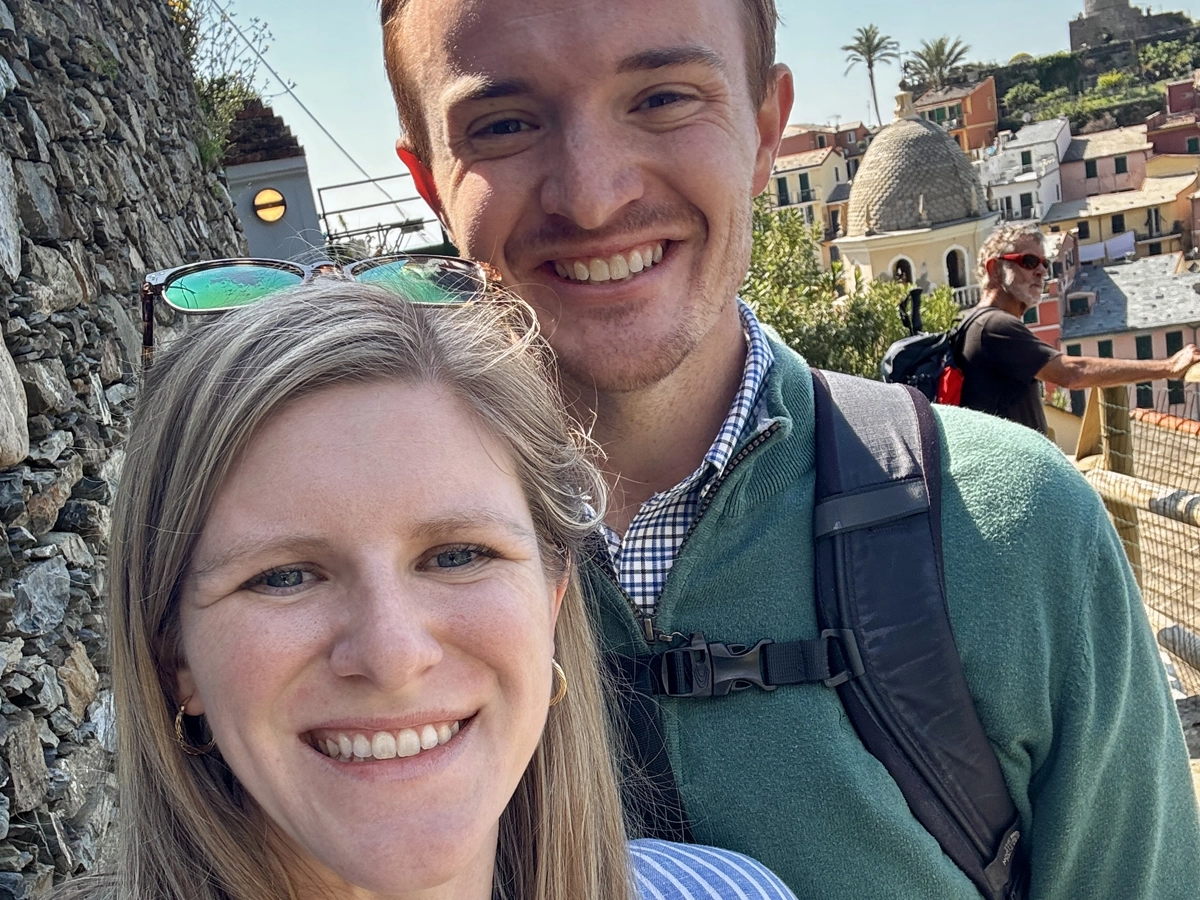
DRS. EMILY AND JOSH RANTA
(Editor’s Note: This article marks the first in a new series that offers a front-row seat to the journey to become a doctor through the eyes of Drs. Emily and Josh Ranta. From the chaos of medical school and residency to the focused intensity of fellowship and the transition into full-time practice, their story reveals not just how doctors are made, but how a marriage can thrive amid the demands of medicine).
Drs. Emily and Josh Ranta never could have imagined when they met in high school as co-workers at a Columbia Chick-fil-A that their friendship would blossom into a romance and then a marriage that carried them through college and medical school. But blossom it did, and they have now embarked on their internal medicine residencies at Prisma Hospital back home in Columbia, surrounded by their extended family.
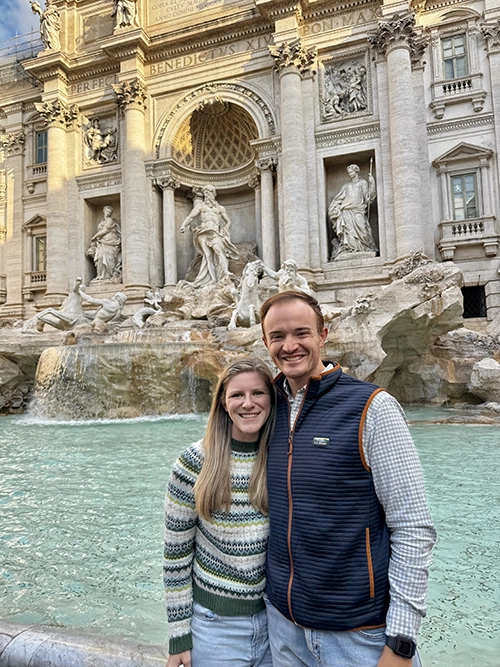
While they are both strongly committed to internal medicine, when it’s time to choose a practice opportunity, they may ultimately go in slightly different directions. Josh has his sights set for now on a traditional internal medicine track. He appreciates the ability he would have to coordinate all aspects of a patient’s health, establishing long-term relationships with patients and families rather than focusing on a specific medical system.
“I’ve always really enjoyed the idea that with internal medicine, I can be in charge of my patients’ care,” Josh said. “The only limit to what I can do is the knowledge I continue to gain.”
Emily is considering taking a subspecialty route, possibly focusing on nephrology or cardiology, both of which interested her during medical school. The narrower focus appeals to her.
For now, however, they are both open to experiencing everything that comes their way and don’t want to think about the future too soon. They recognize that the next three years is a time to grow professionally and build upon the skills they’ve learned in medical school to independently manage their patients’ care.
Emily believes that traveling the residency path together will enhance their experiences. “It’s great that we can bounce ideas off of each other and with our different perspectives, we can get even more out of each situation we come across,” Emily explained.
“Having similar hours is also a huge help, and we understand the stress that each of us may feel at times,” she added.
To stay mentally and physically healthy during the chaotic medical training years, they have learned to stay active. Their favorite ways to recharge are playing a high-energy game of tennis or going on long walks together.
You might also find them relaxing and chatting over a cup of coffee at one of their favorite coffee shops.
When their internship year began in July, they were excited, but there were of course some nerves. “We’ll have to regrow some confidence at the residency level,” Emily said. “There is more at stake, more decisions to make and more pressure.”
A couple months into their residencies, they had already come to appreciate even more about what the next few years would bring.
One thing that surprised Emily was how much there was to learn about team dynamics when reaching out to other staff members. A resident has to learn the ins and outs of who to call, when and how to call, and why to call.
Josh had also gained plenty of insight already. “The team atmosphere of medicine has been an amazing aspect of medicine I did not fully appreciate until residency,” Josh explained. He recognized that pharmacists, therapists, nurses, and social specialists must create a unified voice in patient care.
They both agree that residency will offer incredible opportunities, surrounded by passionate colleagues. “There is always more to learn, and I am excited to do this every day,” Josh said.
EMILY RANTA’S WORKDAY AT–A–GLANCE
There’s no such thing as a typical day in medicine. Here’s a look at the routine part of Emily Ranta’s workday as an internal medicine intern.
5 a.m. — The alarm sounds. I wake up energized and rested. The priority is getting my morning coffee. Being focused and ready helps me make sure the day goes smoothly.
5:40 a.m. — I live about 10 minutes from the hospital, which is convenient for me. I don’t listen to anything while I’m driving. The peace and quiet of the morning helps me gather my thoughts as I prepare for the day.
6 – 8 a.m. — I check on my patients. I usually have about 10 of them. I connect with the nurses on the floor, review charts and test results, order new labs. I try to get a good grip on how they are doing. Sometimes it can be a little bit overwhelming if something unexpected happened overnight. I try to make sure that I know as much as I can about the patients I will care for that day. Some have been in the hospital for a while and some are new.
8:15 – 9 a.m. — I attend an educational lecture. It’s a great way to test my thought processes. It takes us out of patient care for a short time, but it challenges us to think critically. I come in with an open mind and pay close attention.
9 – 11:45 a.m. — We meet in a conference room and discuss up to 20 patients with the senior physician in practice, the senior resident, the floor’s two interns, a pharmacist, and the nurses. It’s a multidisciplinary group. We “round” by presenting what’s going on with our patients. Sometimes I’m nervous — if I get an interesting case that I haven’t seen a lot of, it’s hard to determine the exact management plan. It forces me to think outside the box and it gives me a chance to hear other perspectives and get feedback. Sometimes there are things I didn’t consider, and being new, it’s an opportunity to learn and grow and see how I can do better.
Noon – 1 p.m. — Lunch conferences and lectures occur at this time. Usually, multiple specialists give presentations on different topics. We hear from cardiologists, infectious disease specialists, pulmonologists. It’s a nice time to take a break. I like to sit and absorb what’s being discussed.
1 – 4 p.m. — I finish my notes for the day and also visit patients. If we’ve discussed something noteworthy during rounds, I’ll inform the patients and ask for their thoughts. Sometimes I need to do ultrasounds at the bedside. Before I leave for the day, I’ll check in with the incoming team to provide updates.
I can be paged at any time. Some pages are urgent requests while others are just from patients who have a question. If someone is acutely ill and not doing well, I will rush back up to check on them. I really care about my patients and I want to make sure they do well.
A lot of times, the reason that patients first came to the hospital isn’t the reason why they’re there. It’s like solving a puzzle. We need to be detectives and figure out what’s going on. Sometimes it’s obvious and sometimes it’s not. We’re trying to get the root cause of a situation, address it, and stabilize the patient so they can go home.