
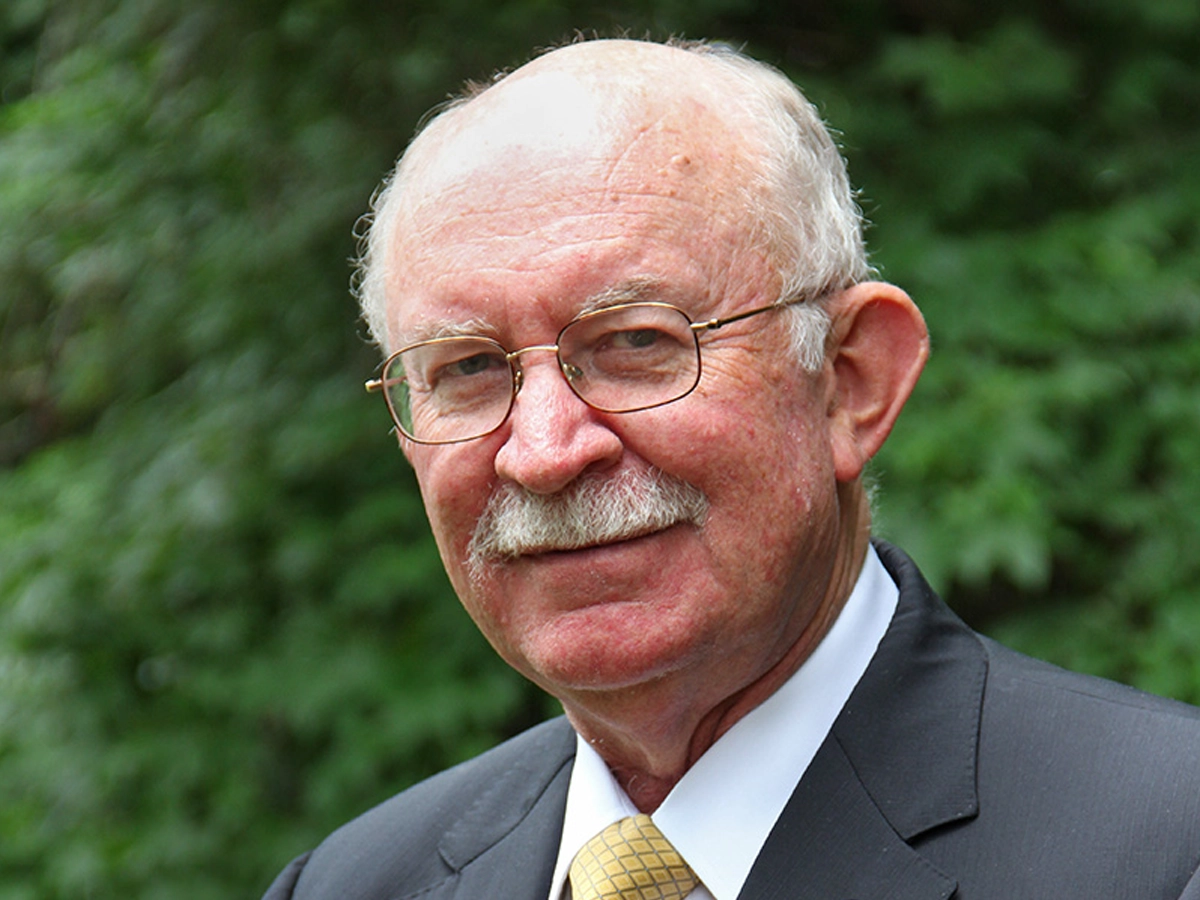
DR. TIM PEARCE
SCMA Honors Steadfast Advocate
The South Carolina Medical Association honored Dr. H. “Tim” Timberlake Pearce as the 2025 Physician of the Year during its annual meeting in Columbia, S.C.
“The award is important to me because it was given by the South Carolina Medical Association, an organization that has fought for physicians for nearly 200 years,” said Dr. Pearce. “I’m overwhelmed with being the recipient of this award and overwhelmingly humbled in that there are so many more physicians throughout the state that are more worthy.”
Dr. Pearce has served on the SCMA board in a host of roles, including as an American Medical Association delegate, president (2014-2015), chair of the board (2010-2013), and on various committees. He just completed his third and final term as secretary.
Dr. Pearce is proud of the SCMA’s long-standing role as a strong political voice for South Carolina’s physicians. He sees advocacy not just as a responsibility, but as a calling.
“Years ago, we were advocates for health in South Carolina — clean water, access to care, medical education,” he recalled. “It’s always been about one thing: How do we help doctors take care of patients?”
That focus has led to some major legislative and institutional wins over the decades. In the 1970s, physicians across the state were under legal siege from aggressive medical malpractice plaintiffs.
“It got so bad,” said Dr. Pearce, “that the only medical malpractice insurance company for S.C. physicians left the state.” In response, SCMA stepped in decisively, helping to create two new insurance companies designed specifically to support South Carolina doctors. SCMA didn’t stop there.
It also played a key role in shaping policy at the state level. “We were active politically in helping to get major medical malpractice reform passed in 2005,” said Dr. Pearce. That reform, he noted, not only protected physicians from ruinous lawsuits but also preserved access to care for patients statewide.
Dr. Pearce’s calling to medicine was not a clear one at first.
“I thought it might be too hard and take too long,” he admitted.
It was his uncle who planted the seed, encouraging him to be the first Dr. Pearce in the family. That encouragement stuck, and he moved quickly once he made the decision. “I guess I was anxious to get there,” he reflected, completing college in three years and medical school in just over three.
A Navy scholarship brought him to Bethesda Naval Hospital in 1973. Expecting a lighter rotation, he instead found himself placed in general surgery — a challenge he hadn’t anticipated but would come to embrace fully. “I had the good fortune of working with a team of surgeons that taught me and inspired me in ways I had not seen previously.”
From that rotation forward, Pearce never looked back. He trained in general surgery at Naval Regional Medical Center — an intense, high-volume hospital in Portsmouth, Va., that served one of the largest naval shipyards in the world. Surrounded by professors who had trained at top institutions, he benefited from a culture of excellence.
Dr. Pearce cites the Broadway musical “Hamilton” when asked about the moment that he was certain that being a surgeon was “precisely the correct career path.”
“I like to be in the room where it happens,” said Dr. Pearce. For him, that room has always been the space where real healing takes place — whether in the exam room, operating room, emergency department, or ICU.
“Being one-on-one with a patient who has a problem I know I can solve, listening to them, understanding their concern, and creating a plan to help,” he added. “That’s what drove me forward and kept me inspired.”
Dr. Pearce is known for standing firmly by his convictions while maintaining a tone of respect and openness, even with those who may not share his views. His ability to express deeply held beliefs without alienating others has earned him widespread respect across the medical community.
Among his guiding principles is a deep commitment to the sanctity of the physician-patient relationship.
“This relationship forms the bedrock of ethical and effective care,” he noted, emphasizing the importance of honoring the private conversations and decisions shared between a doctor and their patient.
Dr. Pearce has also voiced concern over the expanding scope of practice among non-physician providers. He believes that the term “doctor” should be reserved for those who have completed the rigorous training required of medical doctors or osteopaths. “Many non-physician providers seek to do procedures that are not appropriate for their training and background,” he explained.
While Dr. Pearce values the contributions of nurse practitioners and certified registered nurse anesthetists, he believes their work should be collaborative, not independent.
Dr. Pearce encouraged today’s medical students to keep an open mind about the future of private practice. While he acknowledges the stability of being an employed physician — “a regular paycheck, benefits, and not having to worry about an office building or managing personnel” — he also believes that private practice has unique advantages that may soon be more appealing.
“I believe there is a real benefit to private practice that I believe will be coming back within the next few years,” Dr. Pearce said, suggesting that the current employment models may not be sustainable long term.
He also noted deeper rewards of the profession, especially in patient care.
“There is nothing more rewarding than patient care and the opportunity to solve a human being’s problem,” he emphasized. He finds meaning in helping patients through crisis or catastrophic events, where a physician can be instrumental in identifying a therapy or solution.
For Dr. Pearce, the autonomy of private practice — “knowing that you have put out your shingle, opened your practice and have the ability to run it as you see fit” — offers not only professional satisfaction but also a more personal connection to the work of healing.
Fast Facts: Dr. H. “Tim” Timberlake Pearce
Title: MD, surgeon, and medical leader
Location: Beaufort, S.C.
Years of Service: Over 40 years serving the Lowcountry community
Family: Married to Brenda Padgett Pearce since 1983; three children and four grandchildren
Retired: 2025
Education:
B.S. in chemistry, University of South Carolina (1971)
MD, Medical University of South Carolina (1974)
Military Service:
U.S. Navy active duty and reserves (1972–1985)
Achieved rank of commander
Served at Beaufort Naval Hospital (1980–2010)
Beaufort Memorial Hospital:
Joined in 1983
Active staff (1983 to 2022)
Board of Trustees, member (1986 to 1997)
Chair of the Board (1992–1996)
Chief of Staff (2005–2008)
Professional Recognition:
Fellow, American College of Surgeons
Community Involvement:
Emergency Medical Service Board
Medical Control for EMS (1984 to 1986)
Health Advisory Committee for Beaufort County Schools, member
Higher Education Leadership:
Beaufort-Jasper Higher Education Commission, member (since 1996)
Chair, since 2011