
Personal Connections Are Powerful Influence
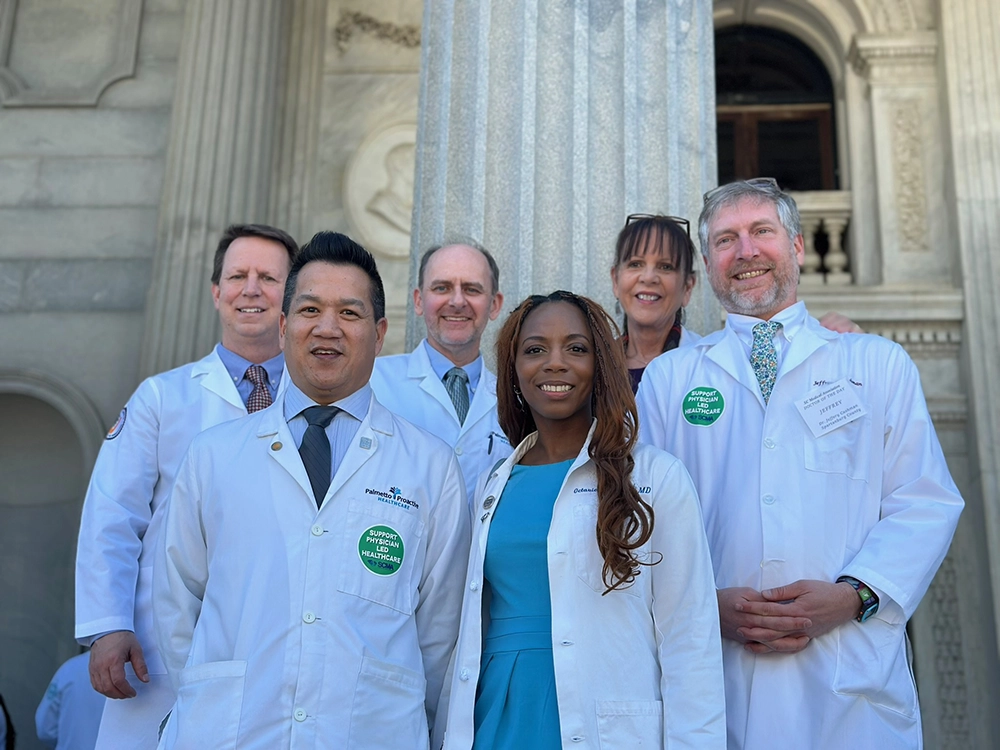
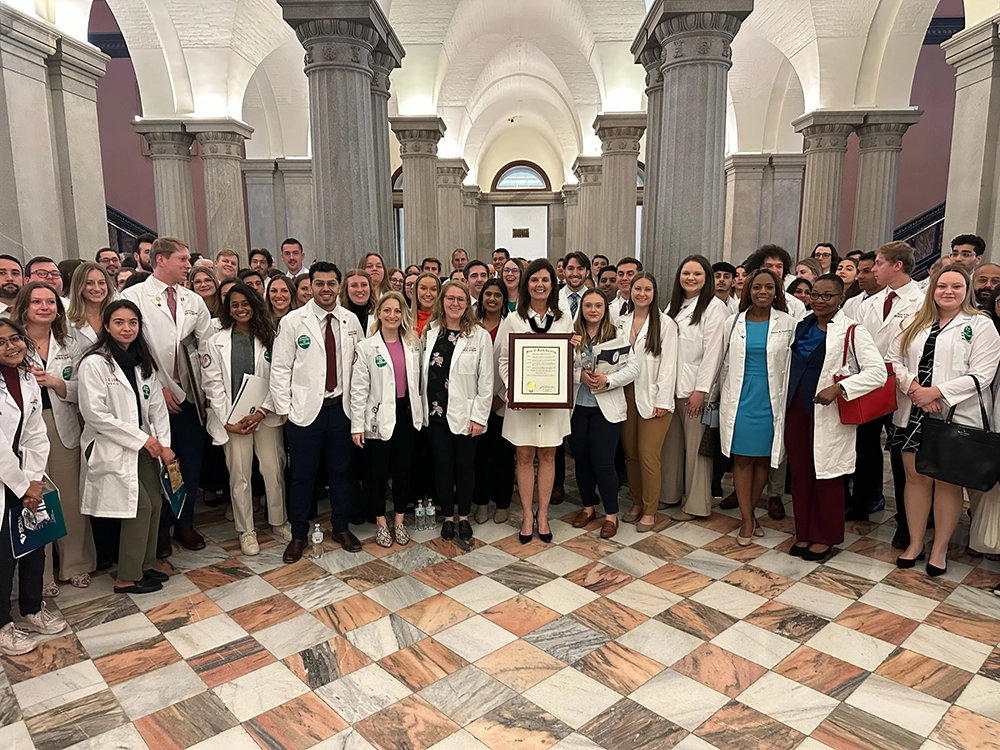
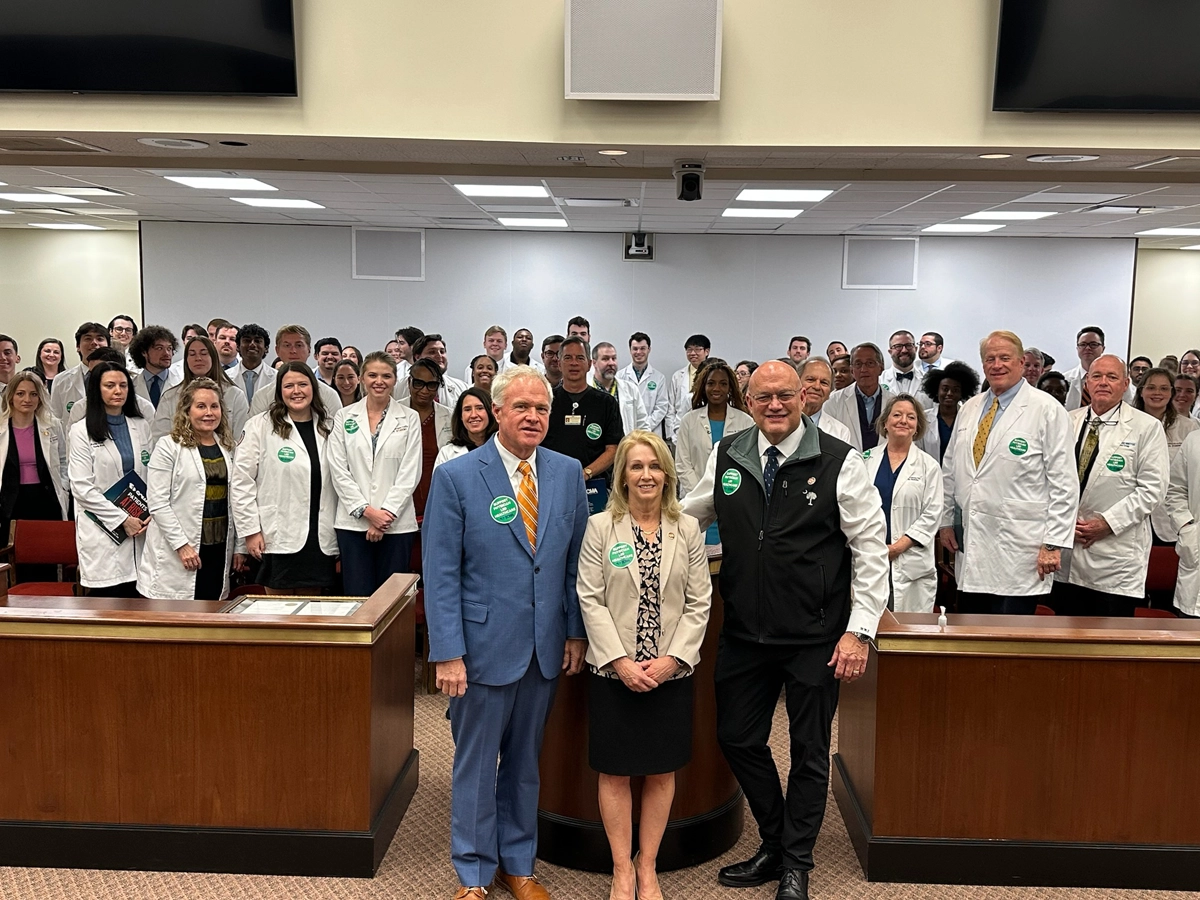
A record number of physicians and medical students showed up at the State House on Physicians’ Day this year, leaving no doubt that physicians are watching and eager to help shape policy. “Personal connections are a powerful influence when advocating for change,” said Dr. Gregory Tarasidis. “This philosophy is the driving force behind South Carolina Medical Association’s annual Physicians’ Day event.”
For years, Dr. Tarasidis’ passionate voice has infused the event which takes place annually at the State House and offers physicians the opportunity to meet one-on-one and in small groups with legislators for a full day of collaboration and connection. Physicians’ Day is essentially a learning day for the SCMA member physicians, residents, and medical students who attend as well as the state legislators. SCMA attendees have the opportunity to share how upcoming legislative changes may impact their practices and their patients; at the same time, they also learn more about the legislative process and who the key point people are at the State House.
A retired ENT-Otolaryngologist, Dr. Tarasidis practiced in Greenwood from 1998 until his retirement in 2023. In addition to his years of seeing firsthand how health policies affect his patients, Dr. Tarasidis is a tireless advocate for meaningful policy reform at the state level. He is past president of the SCMA and currently serves as chair of the SCMA delegation to the American Medical Association.
One of the critical topics at this year’s gathering in March was ensuring physician-led care and supervision over providers such as nurse practitioners, physician assistants, and certified registered nurse anesthetists. Dr. Tarasidis emphasized the importance of physician-led care. “To ensure patient safety and the highest levels of clinical outcome, it is extremely important that physicians manage the scope of practice of other non-physician providers,” he said.
SCMA’s position on the importance of physician-led care emphasizes that physicians are thankful for the expertise and value these professionals bring to patients; however, SCMA maintains that NP’s and PA’s training and education do not prepare them to practice independently without the benefit of physical collaboration or supervision. “During Physicians’ Day, we communicate our concerns on active legislation, and we listen closely to their concerns,” explained Dr. Tarasidis. “We are given the opportunity to talk directly with people in positions to affect our work and our patients.”
Dr. Tarasidis believes that during the recent session, the group was well-received and may have changed how legislators feel about some of the issues most important to SCMA members. Legislative members have to be familiar with so many complex, diverse topics during session that they often appreciate having experts cut to the heart of an issue with them. Conversations during Physicians’ Day do just that.
Making professional connections is equally important to the day’s success. “By slowly creating relationships, you hope to become the go-to person when a legislator wants to know what a local physician thinks about an issue,” said Tarasidis. “We are an educational resource, but we are also voters.”
Dr. Tarasidis reminds his colleagues that while they may not be familiar with the legislative process, physicians can play a key role in shaping the care their patients receive by being a part of the lawmaking process. Meaningful policies that effectively serve patients and physicians may start with a simple exchange of ideas and a shared commitment to the public.