
Strategic Shift Aims to Boost Physician Influence at the State House
In a bold move to amplify physician voices and strengthen its influence at the State House, the South Carolina Medical Association recently completed a major organizational restructuring. The changes, finalized in 2025, are designed to expand opportunities for all interested members, not just delegates, and to allow for more flexible, year-round policy engagement. The strategic shift began in 2022, under the leadership of then-board president Dr. Christopher A. Yeakel. That year, the board issued bylaw notifications signaling forthcoming changes and formed an ad hoc committee to explore a new governance model throughout 2022 and 2023.
“In 2024, the board formally voted to implement the restructuring and it was finally done in 2025,” said President-elect Dr. Jeffrey P. Cashman, who shepherded the shift. For many years, SCMA has invited policy suggestions from members and county chapters during the annual meeting. Delegates from these chapters and specialty societies would gather to discuss, debate, and vote on submitted policies. However, with the increasing demands on physicians’ time, fewer members can commit to the traditional three-day policy discussion process.
“To address this, we expanded opportunities for all interested members, not just delegates, and introduced a more flexible, year-round approach to policy discussions,” said Dr. Jeffrey P. Cashman.
KEY ELEMENTS OF THE RESTRUCTURING INCLUDE:
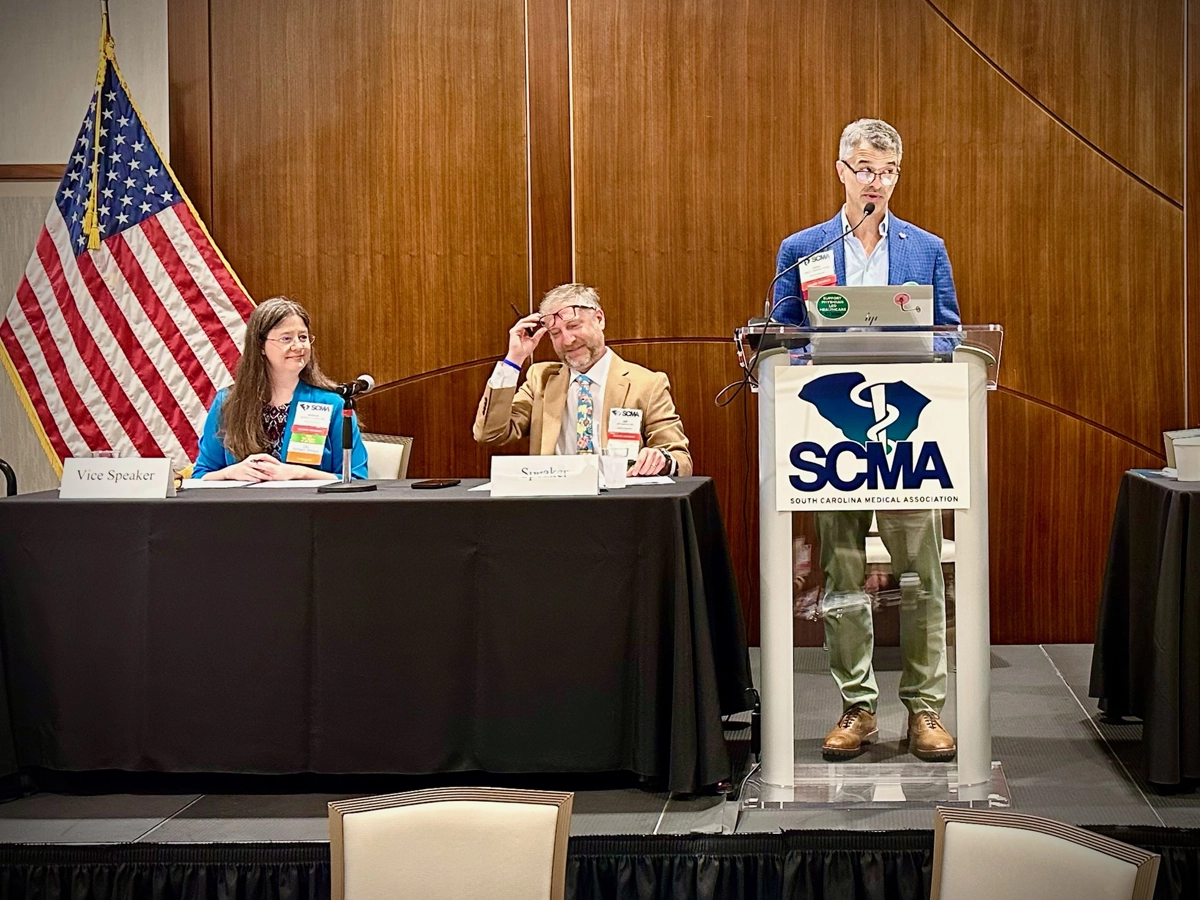
• Town halls, both virtual and in person. The town hall is an open forum for SCMA members to discuss and propose policy changes for healthcare in South Carolina. The SCMA hosted its first in-person town hall at the annual meeting and added two virtual town halls each year. At the in-person town hall in April, members heard updates on SCMA’s ongoing policy efforts and recent legal changes.
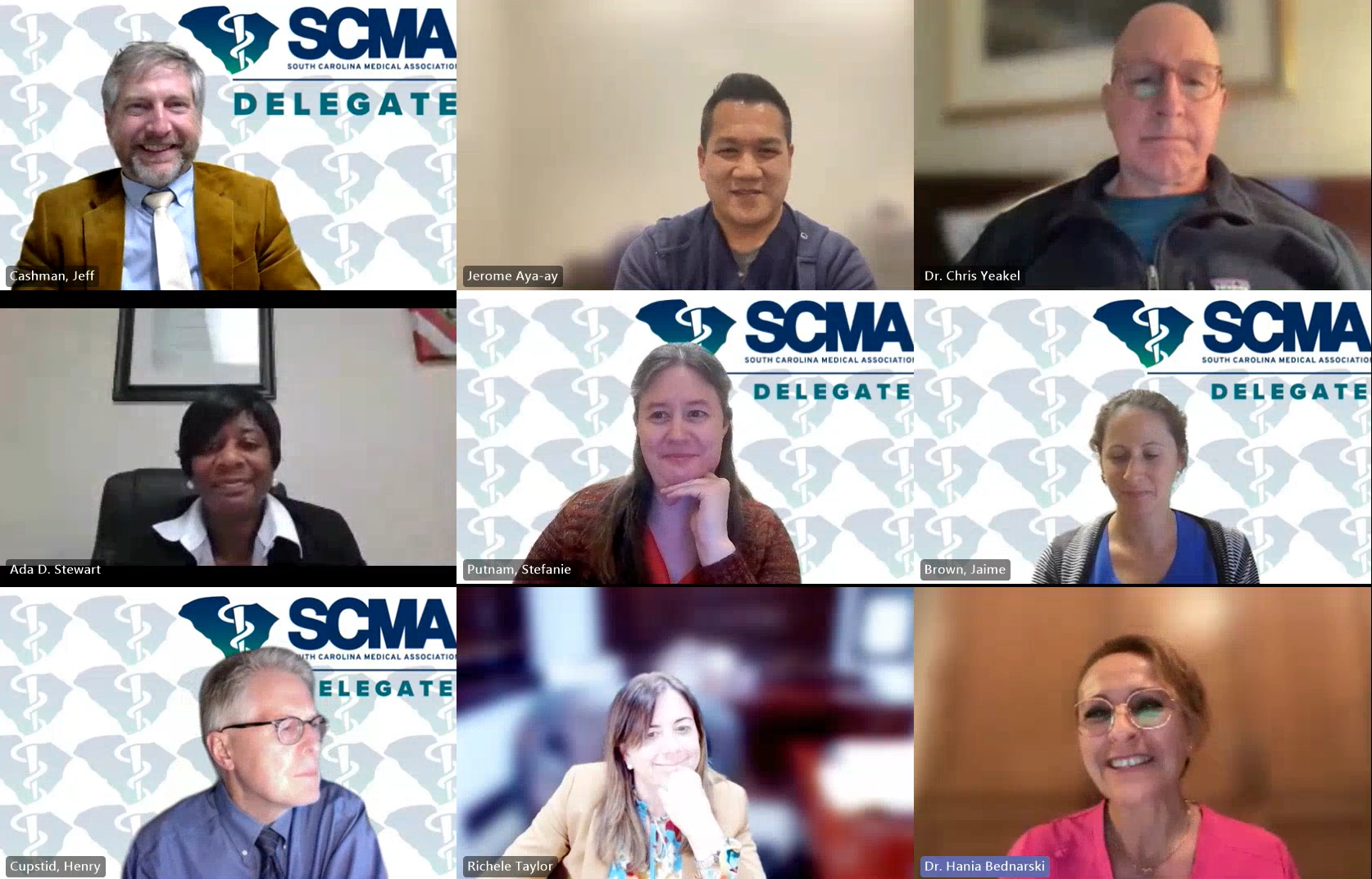
• The Legislative Delegate Committee (LDC), appointed by county chapters and specialty societies, took the place of the House of Delegates. The LDC listens to proposed policies and makes recommendations to the SCMA Board of Trustees. Now all SCMA members will have access to proposed policies in advance of the town halls and can submit written comments or sign up to speak at the meetings. County chapters submit members for both the LDC and SCMA Board of Trustees, ensuring that county members have representation.
• The SCMA’s annual meeting was condensed from four days to two. “Because the House of Delegates no longer exists, more time opened up at the annual meeting,” Dr. Cashman explained. “The meeting is more action-packed, and the shorter time frame gives the SCMA more flexibility when selecting a location.”
These shifts, many members already report, inspire more engagement and less formality. “People that I’ve never heard speak before spoke or submitted proposals,” said Dr. Ada Stewart, FAAFP, who attended the town hall during the SCMA’s April meeting. “There was more opportunity to connect, interact, and get immediate feedback without the formalities of parliamentary procedures.”
The verdict on the true success of the town hall meetings is still out, Dr. Stewart noted. “We really won’t know how town halls are working until we receive a report from the board of trustees,” she said. “The board will be reviewing proposals, and its report will confirm if more voices were truly heard. We also need to experience how new policies are being relayed to members and how they are being implemented.”
Dr. Stewart acknowledged that the change is tough for some who had been used to the early procedural structure. “But progress is not possible without change,” she added. “It is important that we promote the restructuring more so that members who were not able to attend will know the new ways to become active in shaping policy.”
“The restructuring has been a lot of work, but I enjoyed it so much,” said Dr. Cashman, who already envisions the SCMA as a model for other medical associations nationwide that want to engage membership and influence health policy. “There were representatives from two other state societies — Georgia and Tennessee — that attended the annual meeting and they said they hoped to review their groups’ structures and processes because our restructuring was done so well,” Dr. Cashman noted.
HOW DOES THE POLICY PROCESS WORK?
SCMA members may submit policy ideas for consideration. The LDC will listen, vet, and create formal recommendations for policy to send to the SCMA Board of Trustees to consider. The SCMA Board of Trustees will consider all policy submissions from the LDC and make a final decision. The Board has always played an essential role in reviewing policy and prioritizing action items to ensure effective advocacy and policy action. Now, with a small SCMA team, including just one full-time and one contract lobbyist, the Board of Trustees will review policy recommendations and make final decisions to ensure that SCMA’s resources are directed toward issues that best can benefit the majority of members.