
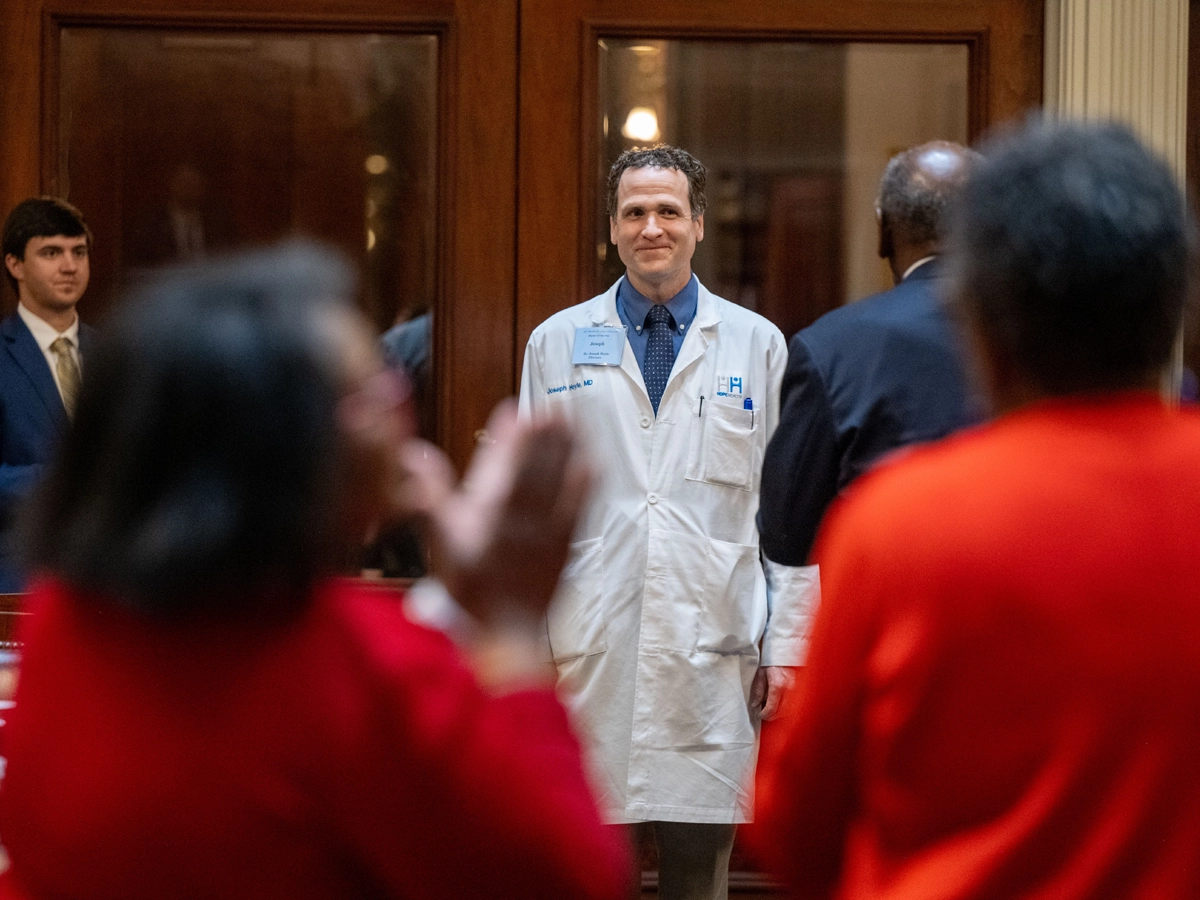
Federally qualified health centers bring essential services to thousands of rural residents
From a handful of people gathering in a Florence, S.C. living room to becoming the fastest-growing federally qualified health center (FQHC) in South Carolina, HopeHealth has become an indispensable healthcare option in recent years for thousands of residents in the Pee Dee region.
The Florence-based nonprofit started in 1991 as a grassroots support group for HIV patients – known then as Hope for the Pee Dee – and now includes primary care, specialty care, school-based clinics, pharmacy and community services from more than 100 providers at 18 locations for those living in Florence, Clarendon, Williamsburg, Aiken and Orangeburg counties.
As an FQHC, HopeHealth offers services regardless of a patient’s ability to pay. It accepts patients of all ages with or without health insurance, offering services on a sliding-fee scale. Help is also available for those needing assistance in filling out paperwork for government programs like Medicaid and Medicare.
Along with the need, Pee Dee residents are becoming more aware of the multitude of services HopeHealth offers in addition to primary care – including dental, chiropractic, rheumatology, endocrinology, psychiatry, pain management, substance use treatment, behavioral health, and women’s health.
A team of clinical pharmacists works with patients to make sure they’re taking the right medicines the right way and looking out for adverse drug interactions.
The group also offers diabetes management and patient education, holding health fairs throughout the region and at its Streater Community Center, where men’s health, financial literacy and family-strengthening workshops are offered.
In many ways, HopeHealth can be a one-stop shop for those seeking medical treatment. HopeHealth tries to make most services available at the majority of its sites, along with other benefits.
“For example, if I was working in a rural emergency room and I had a patient with a dental abscess, I might try to go in and lance it. But at HopeHealth, I can just call upstairs and ask the dentist, ‘Hey, could you come down here?’” said Dr. Joseph Hoyle, a board-certified family physician who’s been treating patients in Florence since 2014, joining HopeHealth three years later. “Because of those collegial relationships with other physicians within the organization, I can do so much and more efficiently for my patients.”
While the population in rural South Carolina counties is declining, the need at HopeHealth has steadily increased since 2014, when the group had 31,050 patients and hosted 106,853 patient visits. By 2024, the most recent year for which data is available, HopeHealth had nearly doubled its patient total – to 59,287 – and patient visits more than doubled to 270,100.
During that same period, annual revenues have increased from $36 million to $200.5 million while net income has jumped from $2.5 million to nearly $20 million. Expenses have also climbed, from $33.5 million in 2014 to nearly $181 million in 2024.
All told, South Carolina has 25 federally qualified health centers with 341 locations. Like HopeHealth, they all face some of the same financial challenges.
Fourteen of these centers, including HopeHealth, own an independent for profit practice association called CIMS (Community Integrated Management Services). CIMS supports best practices in managed care contracts, provider credentially, and data ananlytics and frequently supports the SCMA Annual meeting as a vendor.
There are also ongoing discussions about reforms and potential cuts to the federal 340-B program, which requires pharmaceutical companies to provide drugs at significant discounts to FQHCs. The savings are used to subsidize care for uninsured patients and expand services.
“If you look at our financial reporting, almost all of our margin is from pharmacy, so 340-B is a hot topic right now and over the last few years,” Dr. Hoyle said, adding preservation of the program is a legislative priority for the South Carolina Primary Healthcare Association.
Looking ahead, Dr. Hoyle said he worries about the future pipeline of physicians wanting to work at FQHCs. The caseload can be great and the pay can be less than at for-profit or private practice.
Dr. Hoyle says that SCMA membership has equipped him to add value to the other members of the clinical team and to communicate with patients about questions they have about the healthcare system and social drivers of health. Dr. Hoyle credits his involvement in the SCMA’s Young Physician Section with inspiring his interest in lifestyle medicine, in both his personal practice and at HopeHealth.
No matter the challenges, a commitment to providing quality care to anyone who walks through the door, regardless of their ability to pay, remains at the heart of HopeHealth, as does its commitment to excellence in healthcare.
Last year, HopeHealth received two Community Health Quality Recognition awards from the Health Resources & Services Administration, including the gold Health Center Quality Leader badge for the second consecutive year. The designation recognizes health centers in the top 10 percent nationwide for overall clinical quality measure performance.