
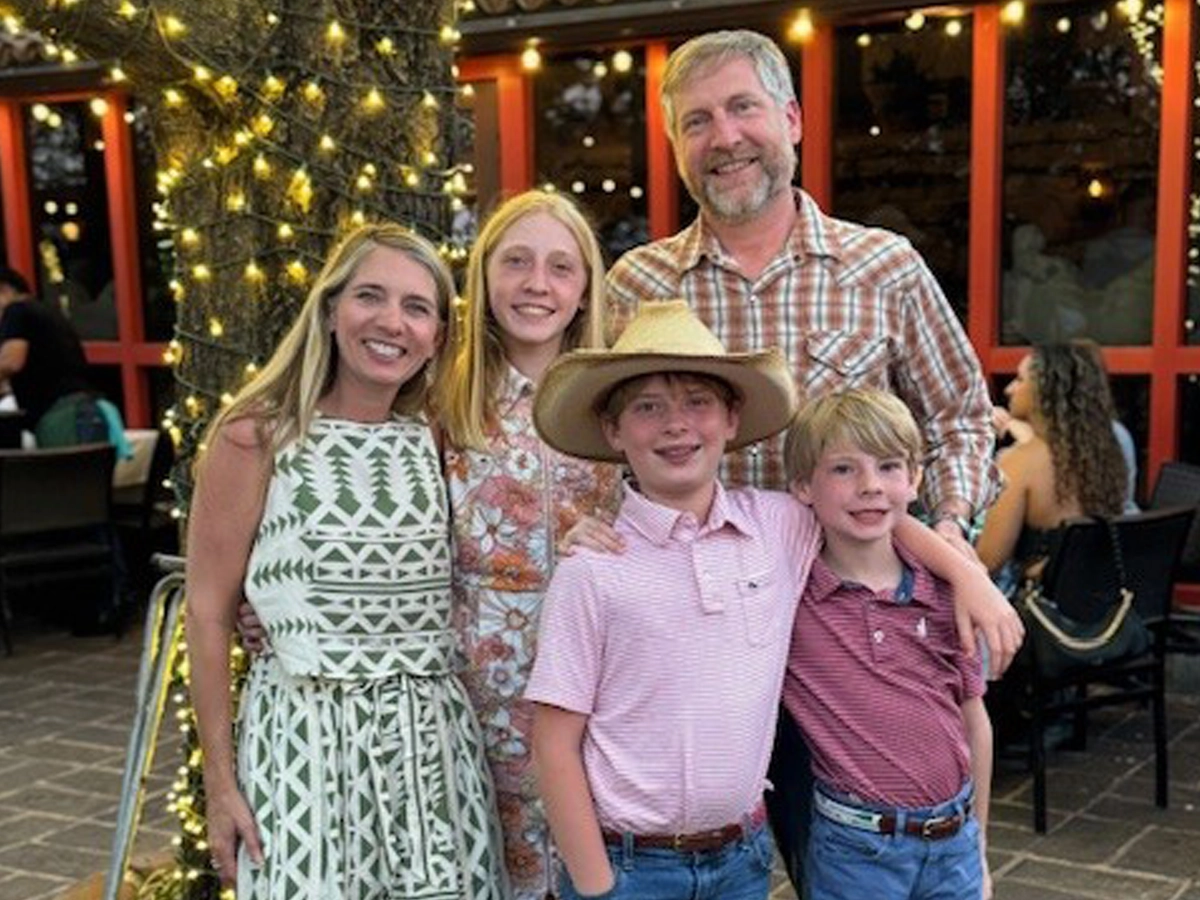
SCMA President Dr. Jeffrey Cashman wants physicians to build the relationships that shape careers & lives
Dr. Jeffrey Cashman has spent years advising hundreds of medical students on everything from career decisions to life’s biggest milestones. But it wasn’t until a young physician recently asked him to become an official mentor that he stopped to consider what mentorship really means.
His answer was an immediate yes. Then, he paused.
“I stepped back and thought, ‘What exactly does that mean?’” Dr. Cashman recalled.
That moment revealed something larger. Many experienced physicians are eager to help but hesitate because they assume mentorship requires a formal program or special expertise. At the same time, medical students and young physicians are actively looking for trusted mentors — they just aren’t always sure how to ask.
“The mentees are sometimes nervous to ask, and the mentors are nervous about what they’re supposed to do,” Dr. Cashman said. “But someone just has to start the relationship.”
For Dr. Cashman, mentorship extends far beyond teaching clinical skills.
Students often seek advice on choosing a specialty or weighing independent practice for employment. But just as important are the conversations about life’s biggest decisions — topics that aren’t covered in medical school but can shape a physician’s happiness and career for decades, such as the work-life integration of various practices and even planning for family life.
“Nobody teaches those things,” Dr. Cashman said. “It’s really the unwritten curriculum.”
Throughout his career as a family physician, educator, and associate dean at Edward Via College of Osteopathic Medicine (VCOM) – Carolinas, he has witnessed firsthand how meaningful mentorship can influence not only physicians’ careers but also their well-being, sense of purpose and ultimately the care they provide to patients.
“If you have happier doctors who are doing what they want to do, that’s going to lead to a better patient experience,” Dr. Cashman said. “It all comes back to patients.”
Over the years, he has guided students as they entered medical school, navigated residency applications, and made career decisions. Some of the most rewarding moments come long after graduation, when former students reconnect as practicing physicians.
Recently, after speaking with a group of new residents, several former students stayed behind simply to catch up.
“It means so much to me,” he said. “I still get text messages from former students. I get to watch them grow into physicians. That’s one of the greatest rewards.”
As the new president of the South Carolina Medical Association (SCMA), Dr. Cashman hopes to make those conversations more common.
STARTING THE CONVERSATION
One of Dr. Cashman’s first initiatives is a series of informal virtual discussions designed to connect physicians at every stage of their careers.
Held on Friday afternoons via Zoom, the sessions do not resemble traditional continuing medical education programs. Instead, physician panelists introduce timely topics before opening the discussion to participants.
“We’re really trying to start conversations,” Dr. Cashman said. “We want physicians talking to each other about parenting, careers, and balancing medicine with life.”
The discussions explore the challenges physicians encounter throughout their careers.
Early-career physicians may talk about negotiating their first employment contract, choosing between independent practice and hospital employment, or balancing medicine with raising a family. Mid-career physicians may discuss burnout, career transitions, or rediscovering purpose. Later-career physicians can share insights on retirement planning, leaving a practice, and finding meaningful ways to continue serving their communities.
For Dr. Cashman, those conversations recognize an important reality: success looks different for every physician.
“What does ‘quality of life’ mean?” he asks. “Does that mean you’re making a lot of money to afford the things that you want to afford and travel, but it also means you’re working nights, weekends, and holidays? For another, it may mean having evenings and weekends with family. It’s different for everyone.”
By creating opportunities for physicians to connect, he hopes the SCMA will become an even stronger resource throughout every stage of a physician’s professional journey.
The virtual fireside-style sessions are currently open to SCMA members only, with the idea to open the sessions up to medical students and physicians who may be considering joining the organization.
RELATIONSHIPS THAT LAST
Dr. Cashman’s own journey into medicine wasn’t conventional.
Growing up in Anderson, South Carolina, he initially studied engineering at Clemson University and began his career with General Electric. Although he enjoyed the work, he found himself searching for something that offered a deeper purpose.
That clarity came after the death of his grandfather, a lifelong educator whose former students returned to share stories about the lasting impact he had made on their lives.
“It made me realize I wanted to spend my life making that kind of difference,” Dr. Cashman said.
He completed additional coursework, earned a master’s degree in epidemiology and attended the Philadelphia College of Osteopathic Medicine’s Georgia campus. After completing his family medicine residency in Anderson, he practiced comprehensive family medicine before transitioning into academic leadership at VCOM.
Looking back, he sees a common thread connecting every chapter of his career: relationships.
The importance of those relationships became deeply personal for Dr. Cashman after an elderly patient gave him a simple photograph of herself. At first, he wasn’t sure why the gift mattered, so he turned to his own mentor for perspective.
His mentor explained that while physicians may care for thousands of patients throughout their careers, for many patients, there is only one physician they truly know and trust. That relationship carries extraordinary significance. “When patients sit around the dinner table talking about their lives and their doctor, they’re talking about you,” Dr. Cashman said. “They’re talking about the person who’s helping them.” It’s a lesson that has stayed with him throughout his career and one that continues to shape his vision for the SCMA. Whether helping a medical student choose a specialty, supporting a colleague through burnout, or guiding a physician toward retirement, Dr. Cashman believes mentorship ultimately strengthens physicians, the profession, and the patients they serve.
“There isn’t anything fancy about mentorship,” he said. “It’s communication. It’s relationships. It’s guidance.”
Sometimes, it simply begins with an invitation: “Can we go get a cup of coffee?”