
Every day, medical research opens doors to cutting-edge treatments and better patient care. “Research fuels medicine,” explained endocrinologist Dr. Mc Anto Antony, former chair for South Carolina Medical Association’s Young Physician Section and director of previous poster competitions.
The SCMA encourages medical students, residents, and fellows from all over the state of South Carolina to submit an abstract of their clinical or scientific work for poster presentation at the annual SCMA House of Delegates meeting. “Their abstract can either be a case report or case series, QI project, analysis from a retrospective or prospective study,” added Dr. Antony. “Good research clearly states the objective(s) and pays close attention to ensure precise presentation of data, methods, and results. But what makes research great is its originality, its relevance to the existing literature, and its insight towards future perspectives.”
“It was a very close race this year,” said Dr. Jaime Brown, chair for the Young Physician Section who oversaw this year’s poster presentations. “Many of the participants had high scores. I would not have been able to guess the winner, the quality of the work was so good.”
“Enthusiastic medical scholars presented strong and meaningful projects and illuminating case reports from a range of medical fields,” Dr. Brown added. “These scholarly activities were also significant steps in the development of medical careers replete with lifelong learning and contributions to the betterment of themselves and their fields.”
With mentorship and collaboration at the heart of their success, the following students were the three winners in the 2025 poster presentation:
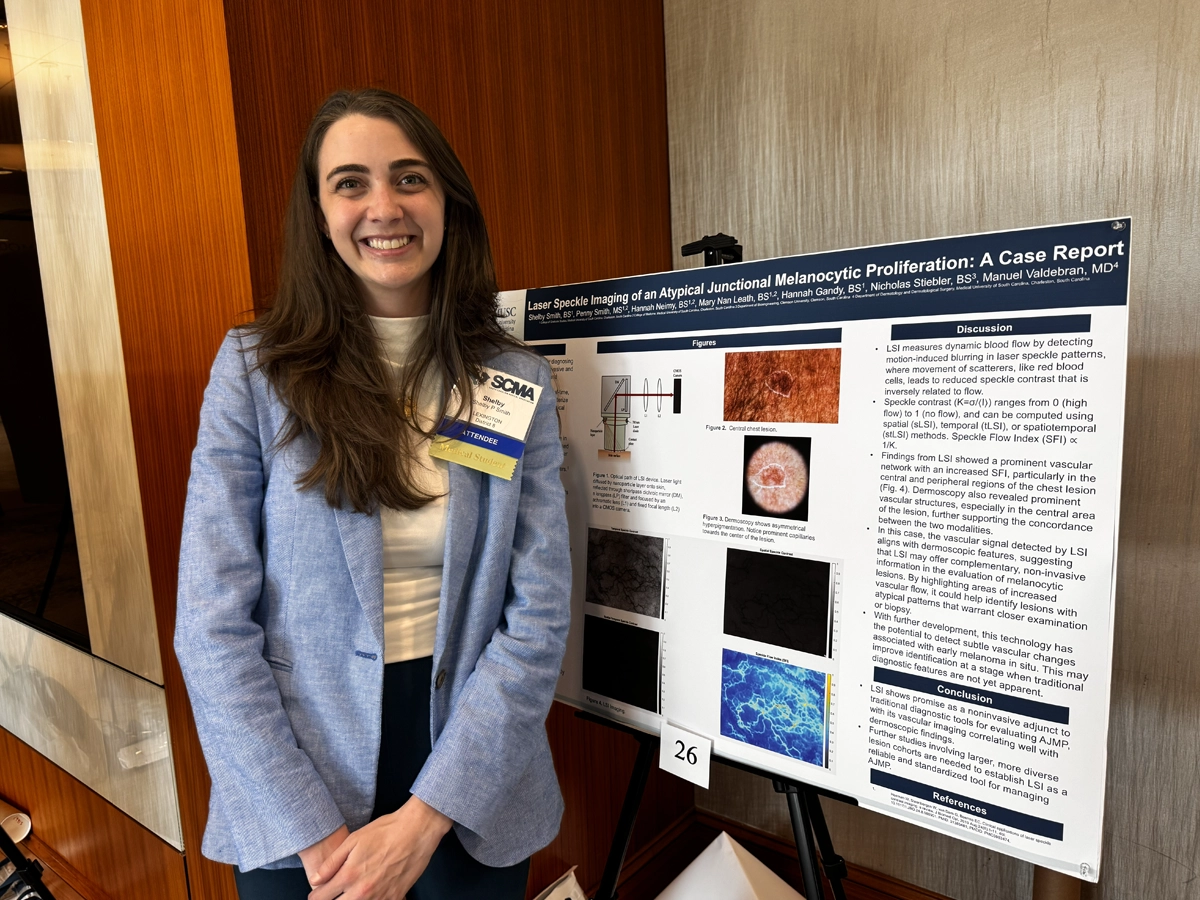
Laser Speckle Imaging of an Atypical Junctional Melanocytic Proliferation: A Case Report
Shelby Smith — University of South Carolina School of Medicine, Columbia
Judge’s Comments:
This year’s winner for the poster competition was the presentation of the novel use of Laser Speckle imaging for a melanocytic lesion. This technique is used in other fields but reports of its use in dermatology are limited. The winning group from MUSC and USC School of Medicine demonstrated how LSI was used in a specific case to assist in patient care, avoiding unnecessary invasive procedures.
Smith’s Comments:
Our research is about a Laser Speckle imaging device to evaluate neoplastic skin lesions. I think that it has the potential to be developed as an adjunct imaging device in evaluation of different kinds of lesions so you can see vascular networks in lesions and compare it to what you are seeing under dermoscopy. With further development, this technology has the potential to detect subtle vascular changes associated with early melanoma in situ. This may improve identification as a stage when traditional diagnostic features are not yet apparent.
Smith completed her master’s in clinical research at MUSC in the department of dermatology during Spring 2025. She is now completing her fourth year at USC School of Medicine.
Decreasing 72-Hour Readmission Rates in Sepsis and Pyelonephritis Patients
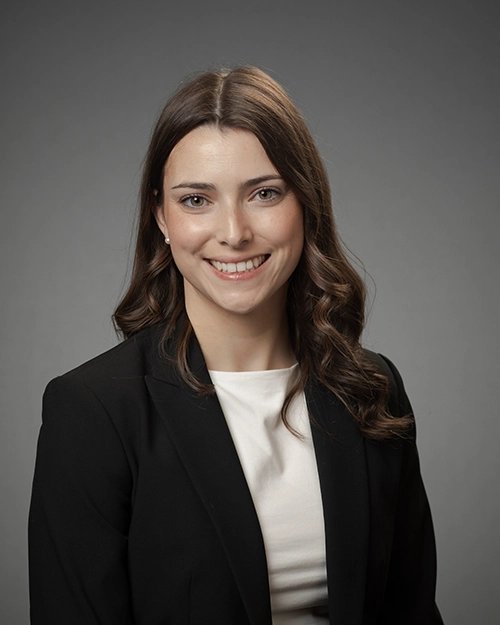
Rowan Burns — University of South Carolina School of Medicine, Greenville
Judge’s Comments:
This quality improvement project provided a great benefit to their patient population treated for pyelonephritis and sepsis, ensuring more patients remained well at home as opposed to requiring re-admission. Concepts from this work can be used to assist other systems to do the same.
Burns’ Comments:
Both sepsis and pyelonephritis account for a large number of hospitalizations in the United States every year and represent a large financial burden to our healthcare system. Further, many of these patients are at an increased risk for health complications during their hospitalization.
Our project was inspired by the desire to reduce hospitalizations in these patient populations to ultimately reduce this burden on both the healthcare system and patients. The results of our study demonstrated that the implementation of a targeted intervention for patients with pyelonephritis or signs of sepsis ultimately resulted in a decrease in the number of 72-hour emergency department readmissions in patients with sepsis.
HIV PrEP Awareness and Barriers to Uptake: Insights from College Campuses Across South Carolina, 2024
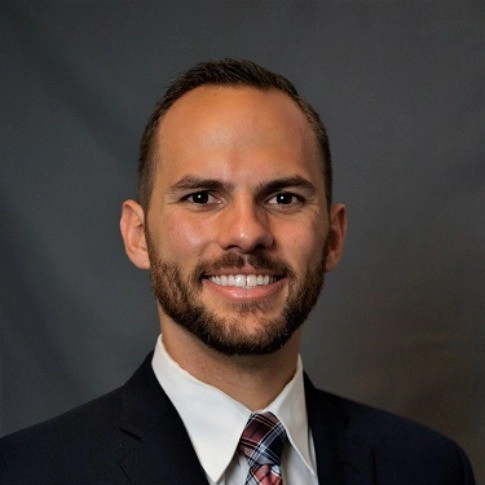
William Capell, MD — Prisma Health/University of South Carolina School of Medicine, Columbia
Judge’s Comments:
This research project illuminated perspectives of a group of young adults about PrEP, including those at higher risk of contracting HIV, highlighting the disconnect between real and perceived risk, as well as their knowledge and preferences regarding this preventative option. Those interested in reaching or treating this population can use this information to find gaps to address and improve interventions.
Dr. Capell’s Comments:
South Carolina is a high-need area for HIV prevention, especially among young adults. This research highlights important gaps in PrEP awareness, uptake, and access across college campuses in our state, along with key barriers and preferences that shape how students seek care. Many students said they would turn to a primary care or university health provider for PrEP services — underscoring the opportunity for both clinical and campus-based settings to play a leading role in prevention.
I hope this work sparks future research and real-world efforts to bring HIV prevention tools to students where they are.
LEARN MORE ABOUT SHINING A LIGHT ON YOUR RESEARCH
THROUGH SCMA. CONTACT:
Rebecca Brannon — rbrannon@scmedical.org