
JESSICA ANDERSON, DO
GERIATRIC PSYCHIATRY ALLOWS ANDERSON TO HELP PATIENTS HEAL
Growing up with two physician parents can shape a child’s future in dramatically different ways. For some, the long hours and emotional demands become a cautionary tale. For others, the constant buzz of medical conversations at the dinner table plants a seed of excitement, curiosity, and purpose.
For Jessica Anderson, DO, that spark ignited early. “I remember many conversations about medicine in the household that sparked my interest,” she said. “Those discussions and energizing environment really influenced my childhood.”
That passion carried her through medical school at Edward Via College of Osteopathic Medicine and into a psychiatry residency at the Prisma Health/University of South Carolina School of Medicine in Columbia. “I originally thought I would want to pursue a more procedural specialty,” Anderson recalled. “Then early in medical school I completed a rotation in psychiatry, and after just a few weeks I knew that’s what I wanted to do.”
While in residency, Dr. Anderson was drawn toward the practice of geriatric psychiatry and began a fellowship in this critical subspecialty earlier this year.
Geriatric psychiatry focuses on taking care of older adults who experience emotional and mental disorders such as dementia, Alzheimer’s disease, anxiety, and depression.
As our population ages, the demand for geriatric psychiatrists is increasing rapidly, and the need for experienced and enthusiastic physicians like Dr. Anderson continues to grow.
According to a recent article in Psychiatric Times, a major challenge in providing appropriate care for older adults with psychiatric disorders is the limited number of board-certified geriatric psychiatrists in the United States. The first geriatric psychiatry certification examination was conducted by the American Board of Psychiatry and Neurology in 1991. Since then, 3,754 board certifications have been issued in geriatric psychiatry, but many more are needed nationwide.
Dr. Anderson recognizes the importance of mental and behavioral health to her patients. “If you can make a difference in their mental health, you can really impact the whole person,” she explained.
She also appreciates the wide variety of diagnoses and settings where she practices. “I’ve already experienced practicing in hospitals, outpatient clinics, long-term care facilities, and Veterans Affairs facilities,” she said.
Dr. Anderson’s involvement with South Carolina Medical Association grew gradually during her medical school years. She first dipped her toes in by attending the SCMA annual conference at the invitation of friends who had resolutions they were supporting.
Once there, she was intrigued by the discussions and knew she would easily find her place among the other members. “I enjoyed seeing physicians debate their positions,” she said. “This type of setting is a good fit for me because I often can see the middle ground.”
Whether it stemmed from being immersed in medical discussions at home during her early years, or from her active participation throughout medical school, her inquisitiveness and ability to absorb and analyze information was readily apparent.
Once in residency, it wasn’t long before she was asked to serve as chair of the resident and fellow section of the SCMA. “In this role I represent the residents’ interests,” she said. “I try to stay involved as much as possible, including attending the annual Physicians’ Day where we educate the legislators about what we see on a daily basis and how it affects our patients.”
She believes it is vital that physicians know what’s going on at the state level and be willing to educate the legislators about what they want. “That way we know our voices are heard,” she explained.
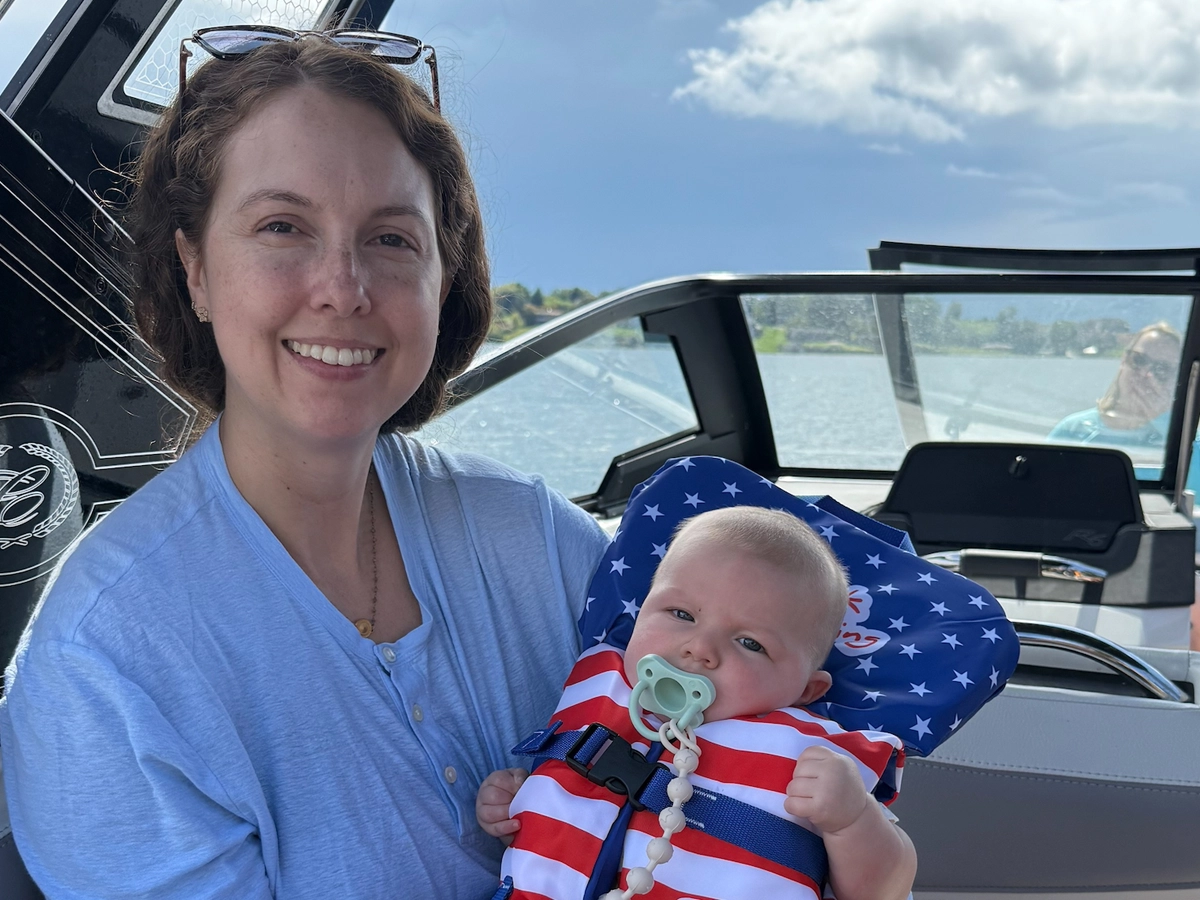
An intense schedule of fellowship responsibilities and engagement with SCMA leadership might seem like a lot to keep up with. However, add to this list that Dr. Anderson welcomed her first child this past summer.
As she and her husband acclimate to life with a growing family, they plan to continue the activities that allow them to stay active and stay connected.
“We love being outside with our three dogs and like to travel on weekends when we can,” she said. Dr. Anderson is also committed to her group fitness classes and even continued to participate during her pregnancy.
Through all the tumult, there is one activity that Dr. Anderson hopes never to drop. That is the weekly trivia night she enjoys with some of her co-residents. You might find The Psychotties competing around town at the Bierkeller Brewing Company, the Mellow Mushroom, or Hazelwood Brewing Company, depending on the week. This tradition is now a great way to maintain the deep friendships forged at the beginning of their residency journey.
It is clear that Dr. Anderson is committed to her philosophy of leaving work at work, as hard as she expects that may be at times, so she can continue doing the activities that help her maintain her strong physical and mental health.
Dr. Anderson is confident that she picked the right career path. “During my psychiatry rotation, I was excited to go to work and knew I wanted to continue in this field,” she said. “I realized that I wanted to do something meaningful that would make me want to show up at work every day.”
For Dr. Anderson and her patients, there is no doubt that she’s where she fits best.