
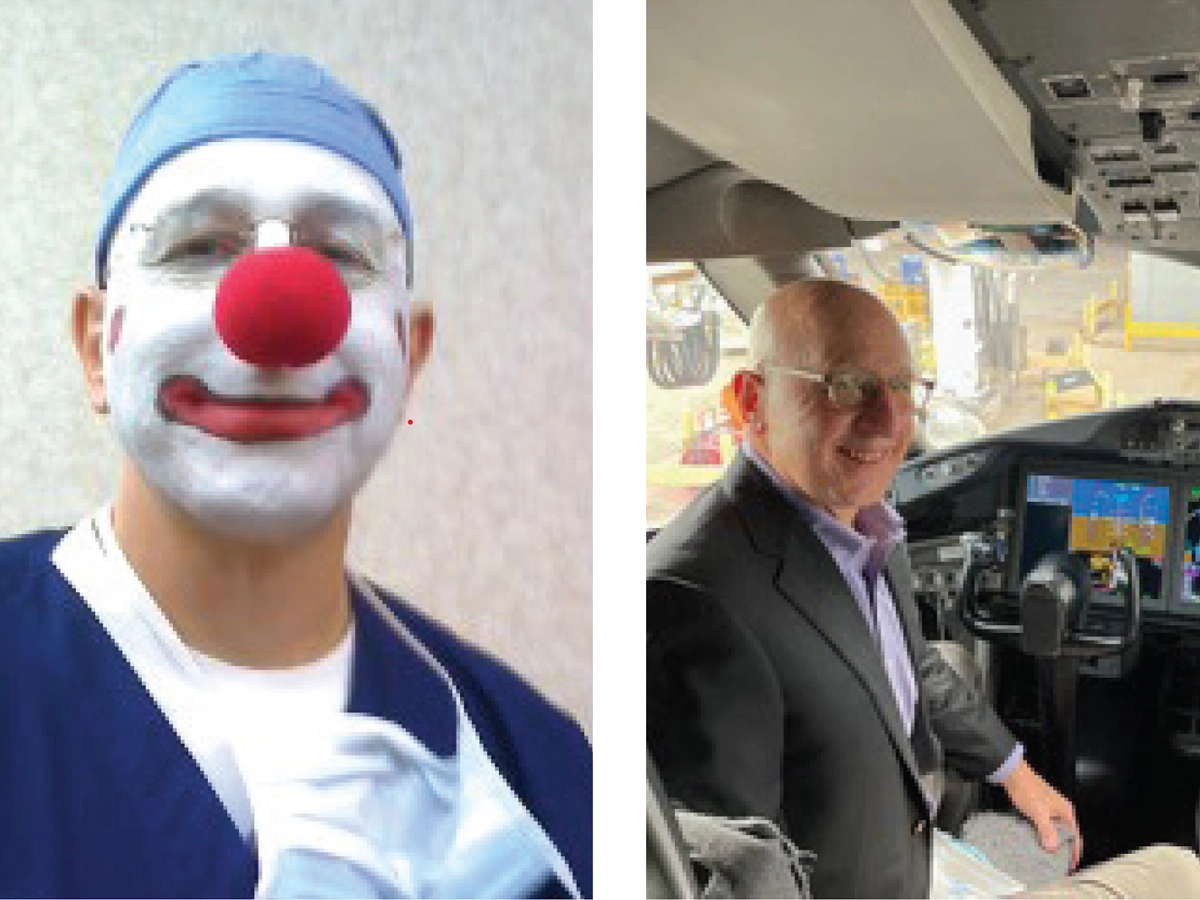
The Sky’s the Limit for Dr. Christopher Yeakel
For more than 35 years, Dr. Christopher Yeakel’s career was devoted to the careful science of anesthesiology, guiding patients safely through some of life’s most vulnerable moments with steadiness and skill.
But medicine isn’t his only calling. Just as deeply as he cared for his patients, his pilot certificate offers him the chance to appreciate the wonders of flight by trading the steady rhythm of patient monitors for the open expanse of sky.
Medicine and aviation are now closely woven into his life, although they took shape along different routes. He wasn’t always certain he was meant to practice medicine, but he had always known he was destined to fly.
His father was a physician, and his mother was a nurse, so he was exposed early to medicine and healthcare as a profession. But it took a while for the idea of choosing a career in medicine to take hold. “I was halfway through college before I realized that I had a genuine interest in a career as a physician,” he said.
Contrarily, his passion for flying began in childhood and hasn’t wavered since. He recalled being fascinated by all aspects of flight, including space exploration. He has fond memories of enrolling in the “Science Program,” advertised in the Highlights magazine of the 1960s, which made children feel as if they were being preselected for the future of the space program.
Although medical school itself is often arduous, Dr. Yeakel took the first steps to making his aerial dream a reality by taking flying lessons and earning his pilot certificate simultaneous to the demanding rigors of his education and training to become a physician.
During his years practicing anesthesiology, he cared for both pediatric and adult patients throughout Columbia, while he and his wife raised their family and built roots in the area.
In addition to his patient care responsibilities, Dr. Yeakel engaged in advocacy at both the state and national levels. His commitment to SCMA began when he started practicing in South Carolina in 1986, followed soon after by serving in a number of leadership positions, and becoming SCMA president for the 2022-2023 term. He also held leadership positions with the American Society of Anesthesiologists and the South Carolina Society of Anesthesiologists.
During his years of clinical practice, flying often took a back seat to professional and personal responsibilities, but he did his best to enjoy time in the air when he could.
In 2021, Dr. Yeakel retired from practicing anesthesiology and made a career shift the following year that seamlessly combined his interests. He is now a senior aviation medical examiner with the Federal Aviation Administration (FAA), performing flight physicals for pilots, air traffic controllers, and other department staff, ensuring they meet FAA health standards.
“Since my retirement from anesthesiology, I still very much miss my patients and work family,” he said. “This position with the FAA gives me an opportunity to be involved in two disciplines I enjoy immensely medicine and aviation, while still working with great people.”
Dr. Yeakel is also quick to point out that despite the differences, working in the fields of aviation and anesthesiology have a remarkable amount in common. “In both roles, precision and focus are key components,” he explained.
The flow of activities is also similar. “In both flying and administering anesthesia, the riskiest times are at the beginning and the end,” Dr. Yeakel said. “When flying, take-off and landing can be the most critical points, similar to the induction of anesthesia and the emergence from or end of a procedure. The most stable portion is usually between those two endpoints.”
Another common thread is the use of national standardized checklists, which provide rigorous, step-by-step guidance for complex procedures to maximize safety. “The checklists that we use in the operating room mirror the use in aviation,” he explained. “These checklists help identify risks pre-, intra-, and post-operatively, with the goal of mitigating or even avoiding error and harm for patients and staff, very similar to the same use of checklists in the aviation industry.”
He added, “The continuous learning woven into both professions results in keeping the patients or passengers as safe and comfortable as possible. The process makes everyone think about ‘what could I have done better?’”
Dr. Yeakel finds a great sense of fulfillment in flying itself. “There is something magical and freeing when you accelerate down a runway and liftoff. You can feel when the plane is ready to fly,” he described.
“Flying is a mental exercise. When you’re flying, you can’t be thinking of anything else other than your plane’s performance, and what’s in front of and ahead of you.”
Dr. Yeakel flies recreationally now about 50 hours a year but is eager to spend more time in the air whenever possible. The birth of his first grandchild who lives out of state will naturally fill some of his free time, but who knows? Maybe he’ll fly out there soon with his wife for a visit from the grandparents.
What’s clear is that Dr. Yeakel found great joy, pride, and satisfaction in his work within anesthesiology, but he will always crave some time with those feelings you can only find up in the air.