
Frank Clark discovers that poetry, dance and creativity make him a better healer
For years, Dr. Frank Clark approached medicine the way an artist approaches a blank canvas: with curiosity, intention, and a belief that every person’s story matters.
That philosophy has shaped his career as a psychiatrist, author and advocate, but it also traces back to his childhood on the South Side of Chicago, where creativity and service were woven into his everyday life.
His late mother, a Chicago public school teacher, believed deeply in exposing her students to the arts. She created plays, taught tap dancing, and encouraged children to memorize poetry, using creativity as a tool to help them learn and grow.
“She created an environment that made learning fun, and that allowed her students to thrive,” Dr. Clark said.
She extended that same encouragement to her son, who began dancing around age 3 and discovered a way to blend his love of performance with his growing interest in medicine.
“The combination of my love for the arts, as well as the exposure to STEM programs really solidified my decision to pursue medicine,” Dr. Clark said. After graduating from medical school in 2010, Dr. Clark completed his residency in Columbia at what is now Prisma Midlands and began practicing psychiatry. His first book of poetry was published at that time called The Other Side.
Over the years, he worked in multiple clinical settings, including inpatient psychiatry, where he served in leadership roles as medical director and division chief for inpatient and consultation-liaison services.
But as his professional responsibilities grew, he realized he needed to reassess what success meant to him.
With reflection, therapy, and prayer, he made the decision to transition into outpatient psychiatry in Greer, where he practices with Prisma Health. The change allowed him to reconnect with the parts of himself that had always brought him joy — including writing poetry, spending time with his family, and embracing creativity.
“When I am able to tap into creative living, I feel much more of a person, I feel more whole, I feel more relaxed, more human,” Dr. Clark said. “I think having that creative outlet allows me to be a better psychiatrist.”
During appointments, he often shares poetry, hoping to leave patients with what he calls “a prescription for hope and a prescription for joy.”
Patients have told him they find the poems comforting and meaningful — and some even remind him when he forgets to share one.
For Dr. Clark, medicine has always been about seeing the whole person, not simply treating a diagnosis.
“Humans are works of art whose canvases are multicolored and multilayered. As physicians, it is imperative that we don’t paint with a broad brush when caring for our patients. Everyone’s canvas will look different, and that is the beauty of embracing belonging and diversity,” he said.
That same commitment to understanding people and advocating for communities has guided his involvement with the South Carolina Medical Association (SCMA), which he joined while still in residency in 2010.
During residency, he served as a resident trustee on the SCMA Board of Trustees, an experience that helped him build relationships and advance initiatives important to him, including efforts focused on mental health, health equity, and diversifying the physician workforce.
“The SCMA is the mouthpiece not only for our profession as physicians, but also for our patients,” he said. “To be a part of an organization that is devoted and dedicated to advocating for our communities is important.” Through the support of the SCMA, he was able to champion ideas such as bringing physicians into schools so children could see healthcare professionals who reflect their own backgrounds and experiences.
Those relationships continued to open doors. His involvement in organized medicine eventually led to opportunities to contribute nationally, including work connected to the American Medical Association’s health equity efforts. “It’s just an example of forming and fostering good relationships,” he said. “And those relationships started at the SCMA level.”
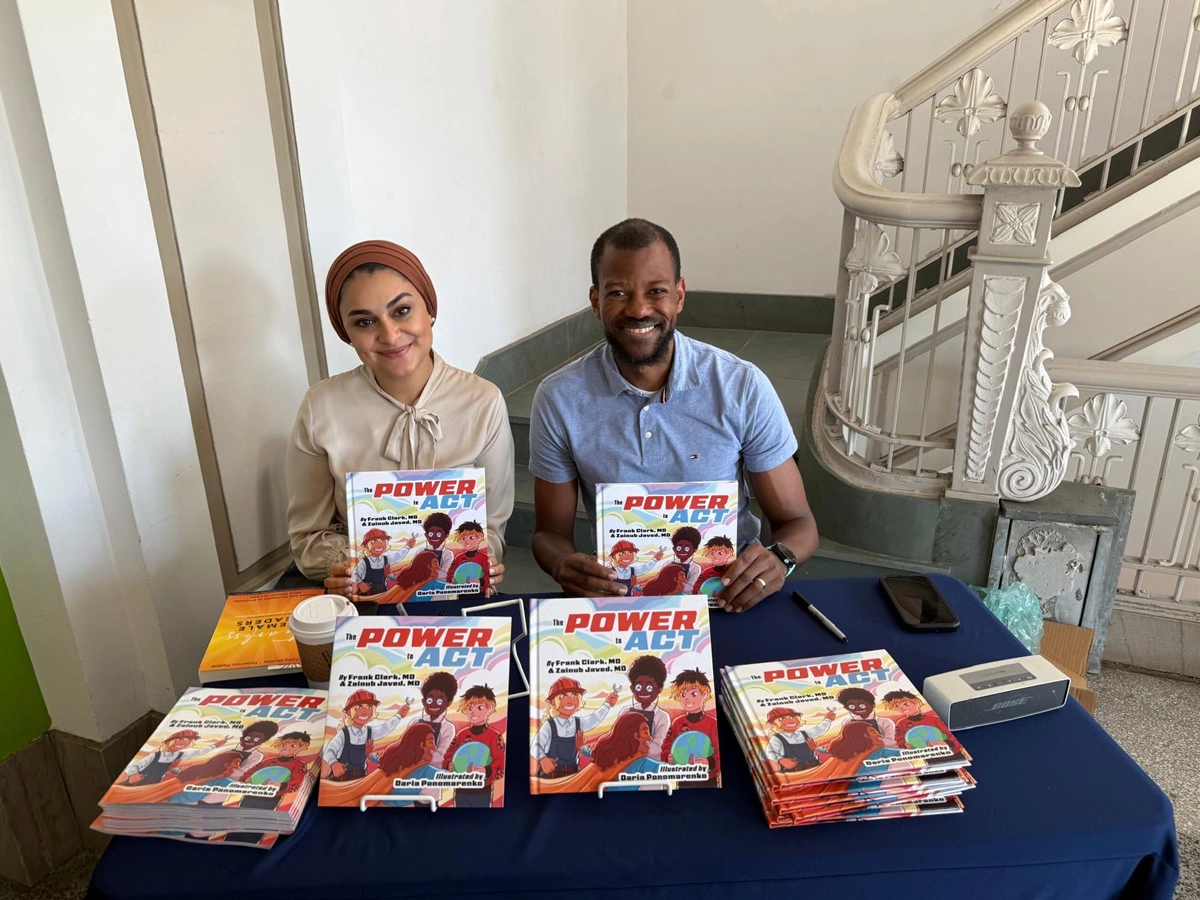
Outside the clinic, he is a clinical associate professor at the University of South Carolina School of Medicine-Greenville and has self-published six books geared towards young readers. His collection includes Positively Haiku and Positively Haiku, Part 2, illustrated books that use traditional haiku to promote self-acceptance, kindness and emotional well-being; The Power to Act, Anticipating Growth and Ollie Fights the Sting, which explore healing, empathy and perseverance for readers of all ages. Dreaming Together is a celebration of the parent-child bond inspired by, and co-written by, his daughter, Claire.
His newest creative chapter recently brought him back to the stage when he competed as a celebrity dancer in Dancing with the Palmetto Stars, which supports scholarships for young women. Partnered with former Miss South Carolina Teen Lily-Kate Barbare, they earned first runner-up for best technique.
After years of focusing almost entirely on work, he now embraces a different rhythm — one that makes room for family, faith, creativity and joy. He routinely tours the state doing author readings and signings, inspiring people from all over.
For Dr. Clark, success is no longer measured only by professional accomplishments. It is found in being present as a husband and father, connecting with patients, encouraging other physicians to embrace their creativity and giving people a sense that they are seen and cared for.
“Being a physician is just a small piece of who I am,” he said. “It helps remind me to enjoy the autotelic experiences that life brings.”
Learn more at www.drfrankclark.com.